
Compression socks, wraps, boots, sleeves, “compression therapy” covers a lot of ground, and the research behind it is more uneven than the marketing around it suggests. Here’s an honest look at what the evidence actually supports.
The mechanism
The idea is simple: after surgery or injury, fluid pools in the tissue around the site, swelling, stiffness, and often pain. Applying controlled external pressure, particularly in cycles rather than constantly, encourages that fluid to move back into normal circulation instead of sitting where it is. Intermittent pneumatic compression, a sleeve or wrap that inflates and deflates on a cycle, is the form most studied in orthopaedic literature and the form built into most cold+compression devices.
Where the evidence is solid
Compression’s best-known clinical use is preventing blood clots (venous thromboembolism) after surgery, it’s a standard part of many post-operative protocols specifically for that reason. Even here, though, it’s worth being precise about the evidence: a review of pneumatic compression alongside anticoagulant medication for clot prevention found the supporting trials carried a high risk of bias, and a Cochrane review on the question didn’t reach a confident conclusion either way. Compression is used because it’s low-risk and plausible, not because the trial evidence is airtight.
Where the evidence is smaller but still real
For swelling and comfort specifically, the picture comes from smaller trials rather than large reviews. One randomized trial in postoperative lipoabdominoplasty patients, 43 women, found that adding intermittent pneumatic compression to a standard compression garment produced less abdominal swelling and higher patient satisfaction at four weeks than the garment alone. It’s a small study in a different surgical population than orthopaedic recovery, but it’s a controlled trial with a measured result, not just a claim.
More broadly, pneumatic compression for the foot and lower leg has longstanding clinical use after orthopaedic and trauma surgery based on accumulated clinical experience, a pattern several published trials describe as resting “mostly on clinical experience rather than prospective research,” which is a fair, honest summary of where a lot of compression-therapy practice actually stands: plausible, widely used, incompletely proven at the scale of a definitive trial.
The combination that’s actually studied
Here’s the practical point: most of the real research on recovery devices doesn’t test compression alone, it tests cold and compression together, because that’s how post-surgical protocols are usually written. The two address different parts of the problem, compression limits fluid buildup, cold reduces swelling-related pain and nerve conduction, so studying them as a pair reflects how they’re actually prescribed.
Sources
- Pneumatic Compression Combined with Standard Treatment after Total Hip Arthroplasty: Pilot Clinical Randomized Controlled Study (PMC10299544)
- Randomized controlled trial, intermittent pneumatic compression after lipoabdominoplasty, 43 patients
- te Slaa et al., femoropopliteal bypass compression trial, World Journal of Surgery, 2011
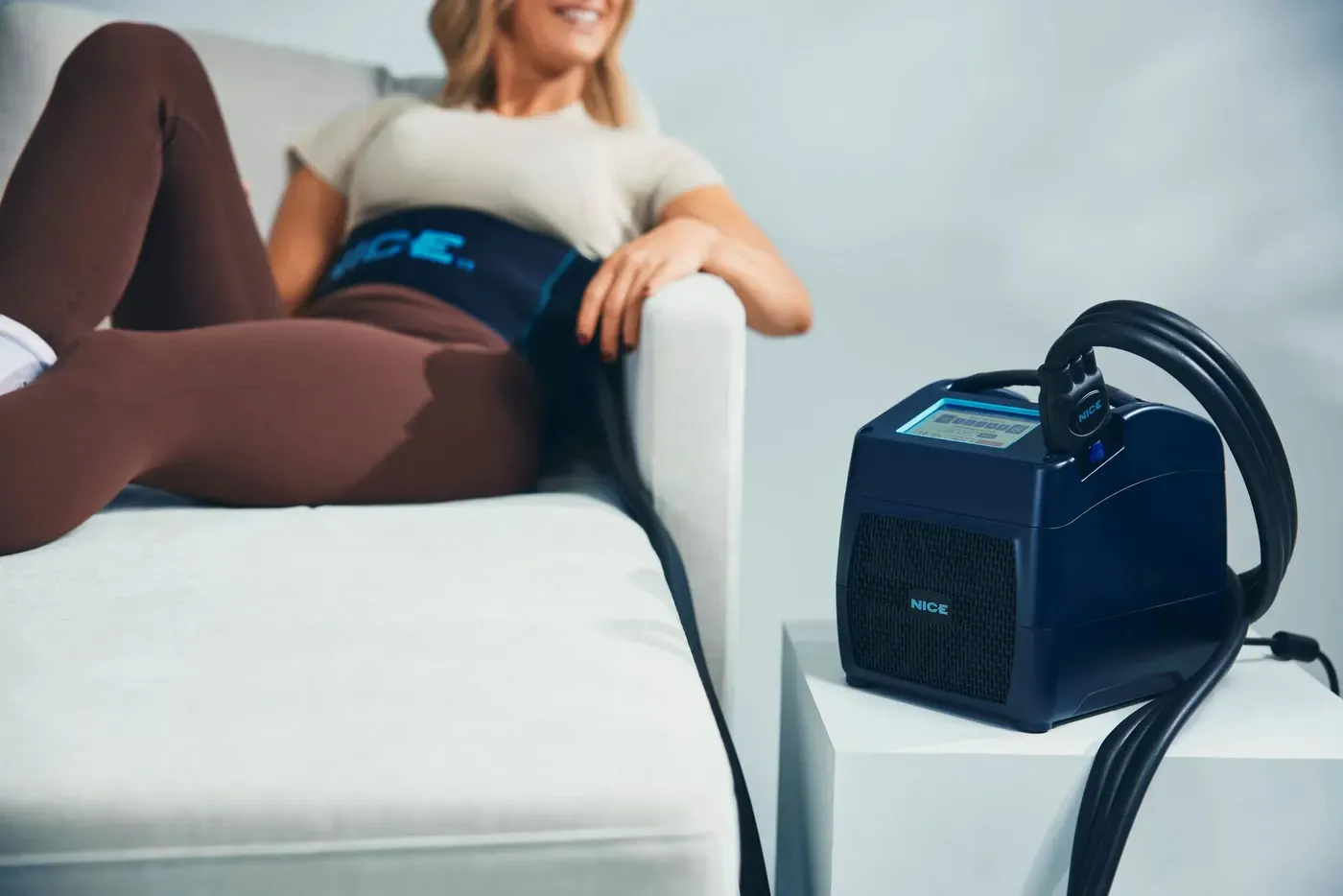
If your plan calls for cold and compression together after surgery, the rental page explains how the NICE1 runs both, five held temperatures and three compression levels, in one unit.