
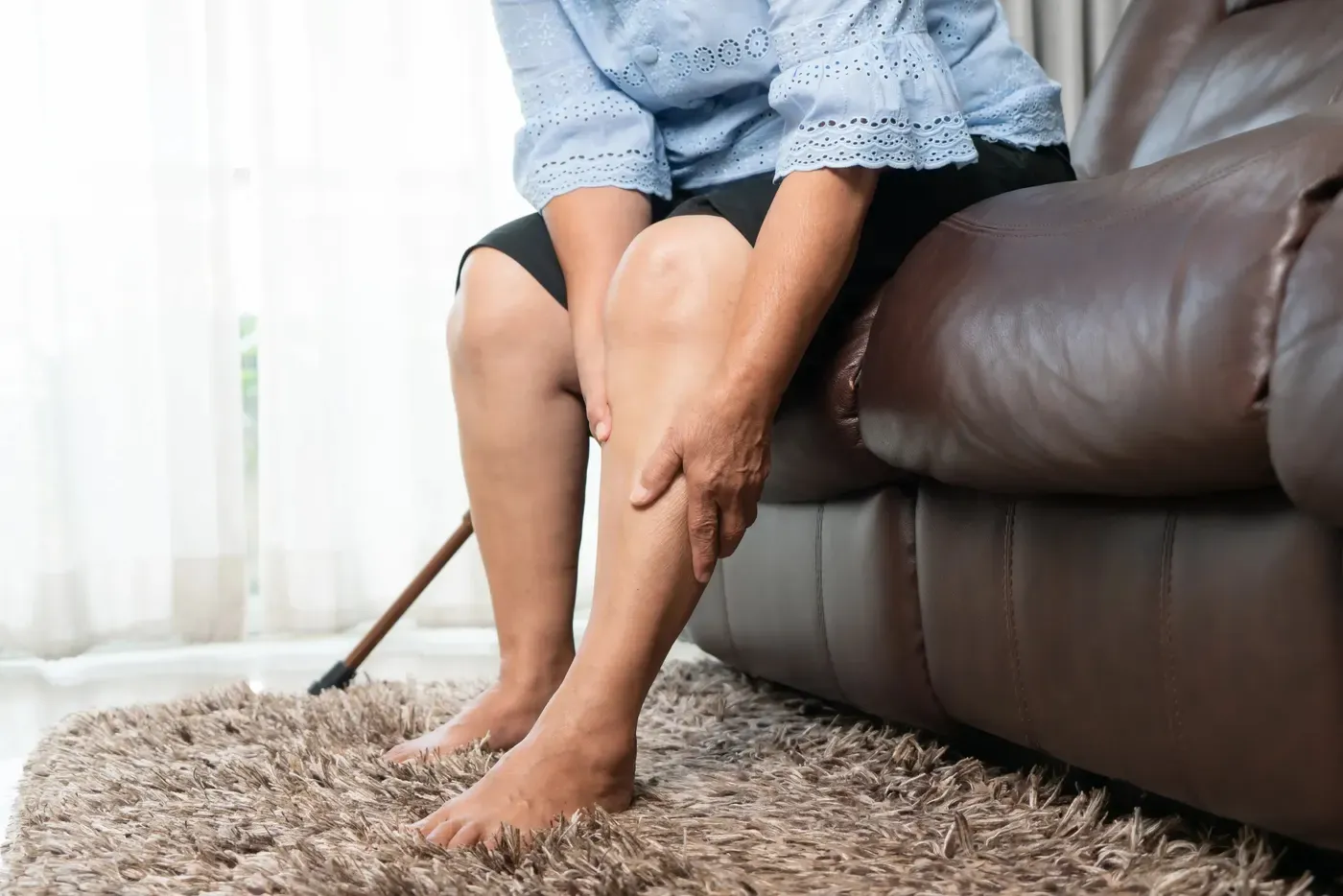
Ask people what they expected to dominate knee replacement recovery and they’ll say pain. Ask them afterwards what actually dominated it and most say swelling, the tight, heavy, balloon-like knee that makes bending hard, walking tiring and evenings long.
Here’s the complete toolkit, and how the pieces work together. Your surgical team’s specific instructions come first; this is the general playbook they’re usually drawing from.
Why the knee swells so much
A knee replacement is major carpentry in a small space. The body responds the way it responds to any major injury: it floods the area with fluid and inflammatory cells to start healing. That response is useful, and also excessive, lingering well past its usefulness. Managing it isn’t fighting your body; it’s turning down a volume knob that’s set too high.
Uncontrolled swelling has real costs: it stretches tissue and hurts, it limits how far the knee can bend (fluid takes up space), and it inhibits the quadriceps, the muscle your entire rehab depends on.
Tool one: elevation
Gravity is either draining your leg or filling it, there’s no neutral. Elevation means the whole leg up, foot above heart level, on firm cushions, several times a day in the early weeks. The classic mistake is a pillow under the knee only, with the foot dangling below, comfortable, and useless for drainage.
Tool two: movement, in doses
The muscles of your calf and thigh are pumps. Every contraction pushes fluid back up the leg, which is why total rest paradoxically makes swelling worse. Ankle pumps, the exercises from your physio, and short frequent walks all drain the leg. Big ambitious days flood it. The knee gives you the report the same evening, read it, and adjust tomorrow’s dose.
Tool three: compression
Gentle, even pressure helps limit fluid pooling. Depending on your protocol this might be a stocking, a wrap, or the compression function of a cold therapy unit, the NICE1 applies intermittent compression at 13, 26 or 39 mmHg through its knee wrap, selected on the touchscreen alongside the temperature.
Tool four: cold, consistently
Cold is the tool everyone knows and most people under-dose. The difference between “iced when I remembered” and “cold therapy on schedule” is weeks of comfort. Two things make consistency easier:
Remove the friction. If every session requires a freezer trip and a dripping bag, sessions get skipped, especially the late-evening ones that help you sleep. An iceless unit runs on one cup of water for the entire recovery, holds one of five temperatures between 42°F and 58°F, and supports overnight use when your team approves it.
Anchor sessions to events. After morning exercises. After physio. After the day’s longest walk. Before bed. Event-anchored sessions happen; “when I get around to it” sessions don’t.
Putting it together: a sample day shape
Many patients settle into a rhythm like: exercises then cold in the morning; a walk then elevation midday; physio or a second exercise block then cold in the afternoon; and an evening elevation-plus-cold session that doubles as wind-down. (Your protocol’s timings override this shape, the point is the pattern: activity, then settle.)
When swelling is a red flag
Most swelling is routine. Call your care team promptly about: swelling that’s rapidly worsening rather than fluctuating, one-sided calf swelling with pain, redness and heat spreading from the incision, fever, or drainage. Those aren’t “wait and see” symptoms.
The toolkit above runs for weeks, which is exactly how our rentals are shaped, 2-week increments, extensions per your physician’s medical necessity. The knee rental page has pricing and delivery details, including having the unit home before surgery day.