
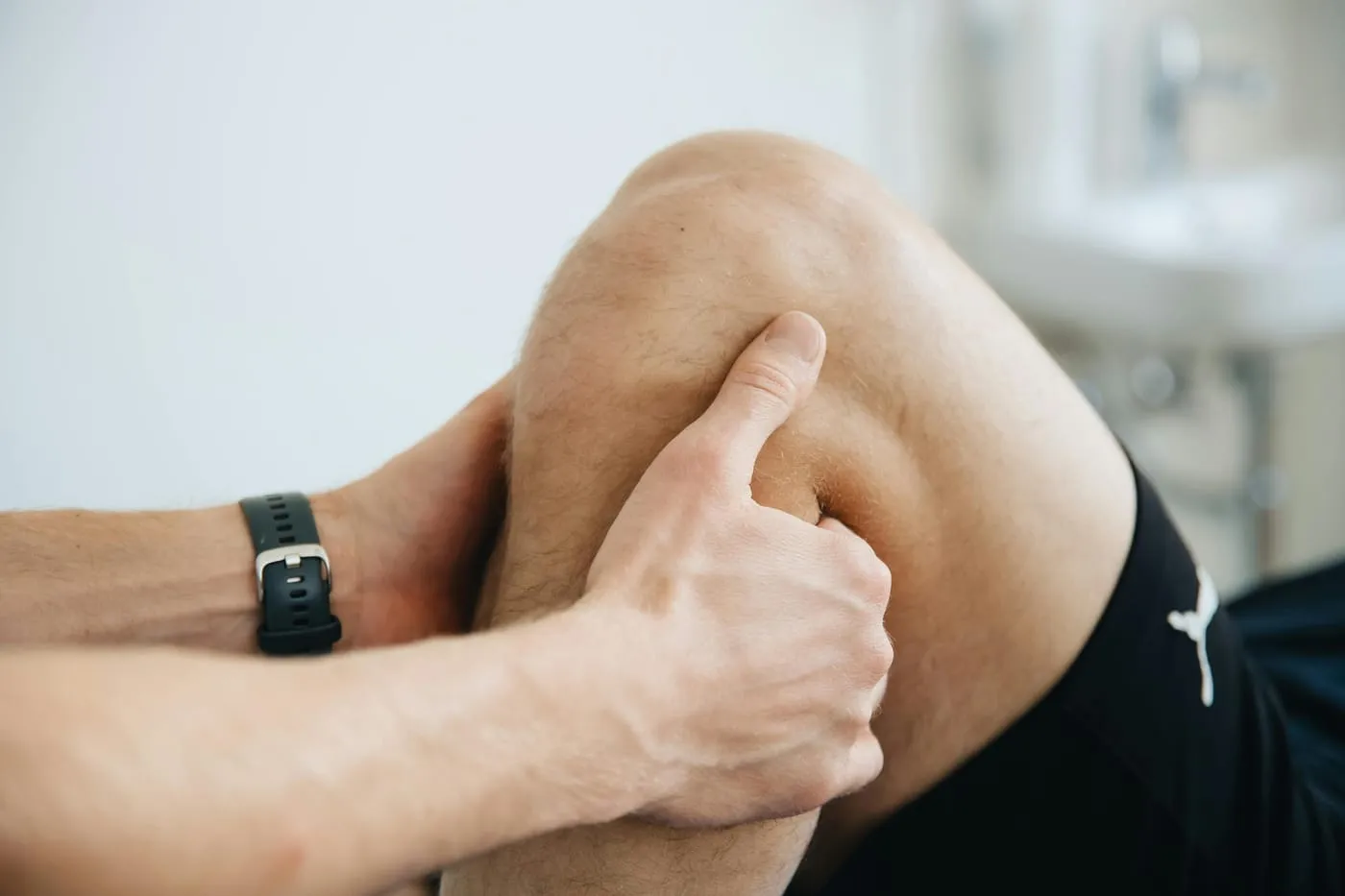
“I’m having meniscus surgery” describes two operations with completely different recoveries. Knowing which one you had, and why the protocols differ so much, is the single most useful piece of knowledge for the weeks ahead.
As ever: your surgeon’s protocol is the authority. This guide explains the territory; they hold the map for your knee.
Two operations, one name
The meniscus is the C-shaped cartilage cushion between your thigh and shin bones. When it tears, a surgeon generally has two options:
Meniscectomy (the trim). The torn fragment is removed and the edge smoothed. Nothing needs to knit back together, so recovery is about calming the joint down: swelling control, quad reactivation, progressive return to activity, often over weeks.
Meniscus repair (the stitch). The tear is sutured so the tissue can heal. This preserves the cushion, good news for the joint’s long-term future, but now the recovery must protect healing tissue, exactly like a rotator cuff or ACL. That means restrictions: often limited weight-bearing, a brace, and a cap on how far the knee may bend for a while. The timeline stretches to months.
Same incisions, same day surgery, radically different rules. If you’re not certain which you had, ask, the answer changes everything about your next two months.
The first week: identical for both
Whichever operation you had, week one looks similar: a swollen, grumpy knee that wants elevation, prescribed exercises, and consistent cold.
The swelling point deserves emphasis because it’s mechanical, not cosmetic: a knee full of fluid switches off the quadriceps. A switched-off quad means a wobbly knee, a limp, and slower rehab. Every session of cold and elevation is quad rehab by another name.
This is also where equipment choices show up in practice. Ice packs work, briefly, and with constant freezer rotation. A circulating knee wrap holds one of five set temperatures between 42°F and 58°F with gentle compression, runs on a cup of water, and doesn’t care whether the session is at 2 p.m. or 2 a.m. For a trim, that’s a comfort; for a repair, with weeks of restricted mobility ahead, it’s logistics you don’t have to think about.
The fork in the road
After a trim, progression is driven by symptoms: as swelling settles and the quad wakes up, walking normalises, then stairs, then activity. Setbacks usually mean “too much too soon” and respond to a few days of the basics.
After a repair, progression is driven by the calendar and the protocol: weight-bearing advances when the surgeon says, bend limits lift in stages, and the brace comes off when the healing timeline, not your enthusiasm, allows. The frustrating part is feeling fine while still being restricted. Feeling fine is not the same as healed tissue; the restriction is what gets you a meniscus that lasts.
Both roads lead through physio
Either way, physiotherapy carries the middle chapters: range of motion, quad and hip strength, balance, and eventually the harder work of preparing the knee for whatever you’re returning to. Post-exercise soreness and swelling are expected, settle the knee afterwards with elevation and cold, and treat flare-ups as information about pacing.
If a meniscus procedure is on your schedule, our knee rental page covers the knee wraps, rental pricing in 2-week increments, and delivery before your surgery date, worth sorting before the operation, especially if yours turns out to be a repair.