
Foot and ankle surgery has a recovery style all its own. The operation might be a bunion correction, an Achilles repair, a fracture fixation or a ligament reconstruction, but the recovery almost always revolves around two commandments: stay off it and keep it up.
This guide covers what that actually looks like at home, and where cold and compression therapy fits. As always, your surgeon’s instructions override anything you read here, foot and ankle protocols vary more than almost any other area of orthopaedics.
The gravity problem
Here’s what makes feet different: they’re the lowest point of your body. Every minute you spend upright, gravity pulls fluid downhill, and after surgery, there’s more fluid than usual looking for somewhere to pool. Swelling in a foot or ankle isn’t just uncomfortable; it strains incisions, delays wound healing, and makes casts and boots feel two sizes too small.
That’s why elevation isn’t a suggestion in foot and ankle recovery, it’s the central activity. “Toes above the nose” is the phrase many care teams use: foot up on pillows, above heart level, for most of the day in the early weeks.
Setting up for the long sit
Since you’ll be spending serious time parked with your foot up, build the station before surgery:
- The spot: a sofa or recliner with room to elevate the leg on firm cushions, high enough that the foot sits above your heart when reclined.
- Within arm’s reach: phone and charger, water, medications, remote, reading material, and your cold therapy setup.
- Mobility aids ready: crutches, knee scooter or walker fitted before the operation, with clear routes to the bathroom and kitchen.
- A plan for supplies: you likely can’t drive, and hopping to the freezer on crutches for ice gets old immediately. This is worth solving in advance.
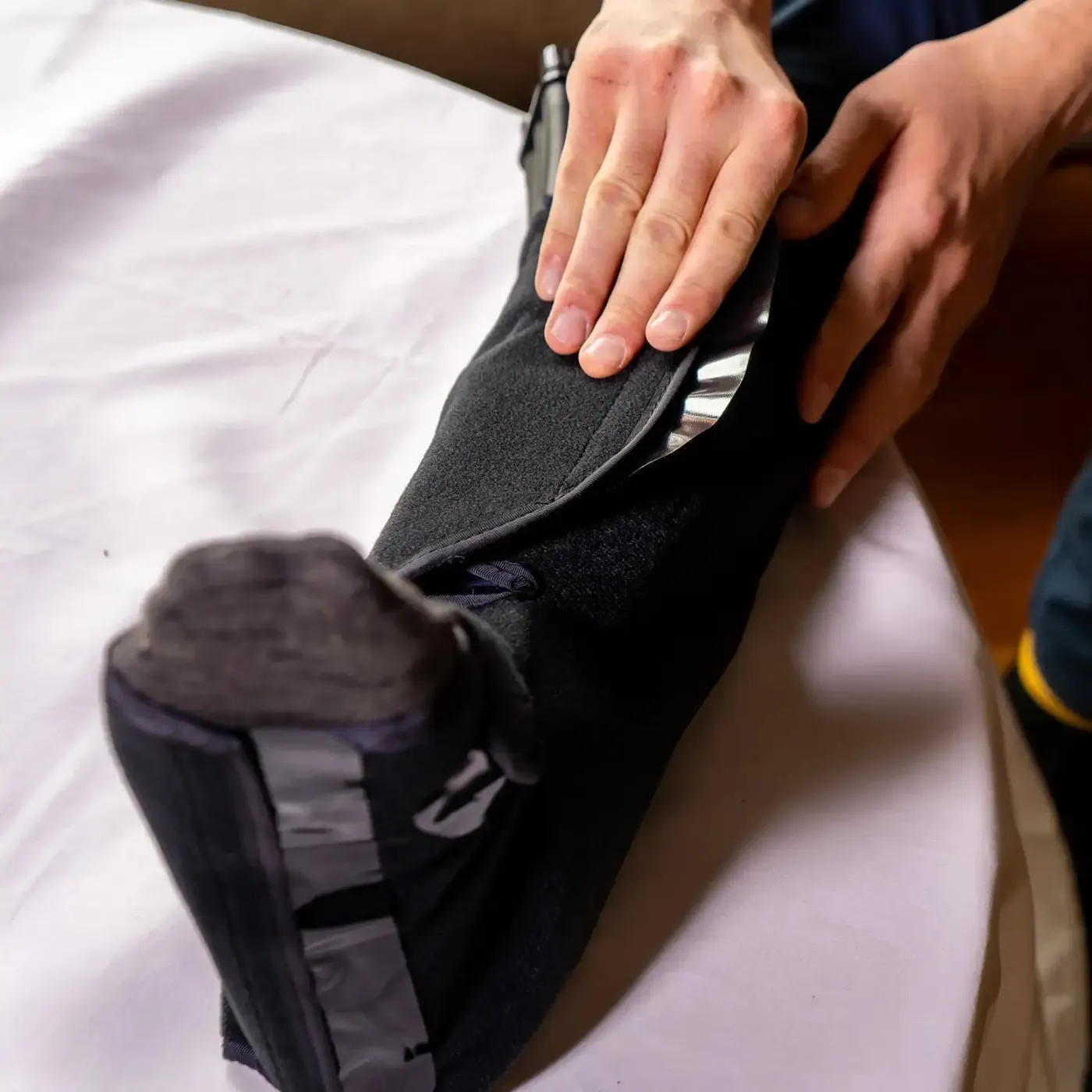
That last point is where an iceless system earns its keep. The NICE1 runs on one cup of water for the entire recovery, there is no ice to buy, haul or refill. You set one of five temperatures between 42°F and 58°F and the unit holds it, with gentle compression through an ankle wrap that stays strapped in place no matter how high the foot is propped.
The early weeks: swelling is the report card
In the first stretch after surgery, swelling is effectively your progress report. Well-managed, it means more comfortable days, better-fitting boots, and wound checks that go smoothly. Poorly managed, it’s throbbing evenings and a foot that protests every minute spent upright.
The routine most teams prescribe is some version of: elevate consistently, use cold therapy on schedule, move only as permitted, and respect pain, a throbbing foot is usually a foot that’s been down too long.
Because sessions happen many times a day, consistency of temperature matters more than people expect. Ice packs on an elevated foot are at their coldest for a few minutes and warming from then on. A circulating wrap holds the level your protocol asked for from the first minute to the last, including through an evening session that runs while you watch a movie.
Getting mobile again
When weight-bearing returns, it comes in stages, partial weight in a boot, then progressive loading, then a return to normal shoes that feels strangely momentous. Physiotherapy works on the ankle’s range, the calf’s strength (which shrinks remarkably fast in a boot), and your balance, which needs more rebuilding than most people expect.
Swelling flares after each new stage, first day in a boot, first full day of walking, first return to work. That’s feedback, not failure. The same tools apply: elevation and cold after activity, for as many weeks as your team advises.
The short version
Foot and ankle recovery is won lying down: foot up, cold on, patience engaged. Solve the ice-logistics problem before surgery and the whole thing runs smoother. Our foot and ankle rental page covers the ankle wraps, pricing, and how the NICE1 arrives before your surgery date.