
Ankle surgery covers a wide range of procedures, a fracture fixed with plates and screws, a ligament reconstruction, a fusion, and the recovery mechanics share a common thread: swelling control, elevation, and a slow, staged return of range of motion.
What Changes by Procedure?
- Fracture with plates and screws: often the longest non-weight-bearing period, typically weeks before you’re cleared to put weight on the joint.
- Ligament reconstruction: usually a shorter non-weight-bearing window, with ROM work starting sooner under physio guidance.
- Ankle fusion: a longer overall recovery, since the joint itself is being permanently stabilized rather than repaired.
Why Is Elevation So Important?
An ankle sits at the bottom of your leg, gravity pulls fluid downward into it constantly. That’s why “foot up, above heart level” comes up in nearly every ankle recovery plan, more than almost any other joint. Ice bags slide off an elevated ankle and soak whatever they’re resting on, which is part of why a wrap-based system is worth considering here specifically.
How Does Cold Therapy Fit With Elevation?
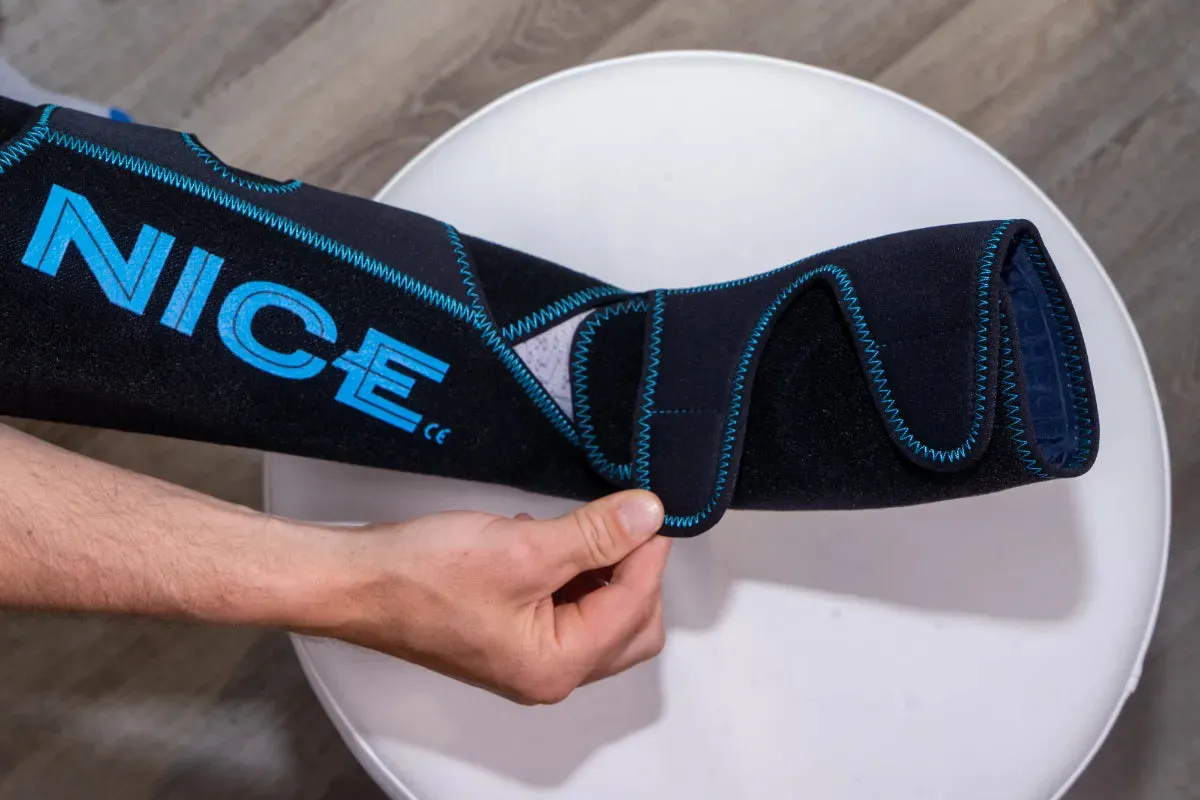
A frozen gel pack starts cold and warms within 15 to 20 minutes, meaning frequent swapping while you’re supposed to be resting elevated, not getting up. The NICE1’s ankle wrap holds a chosen temperature, 5 levels from 42°F to 58°F, with adjustable compression (13, 26 or 39 mmHg), for the length of a session, while your foot stays up and still.
What Should You Expect From ROM Work?
ROM work almost always starts gently and builds. Early sessions might only move the joint a few degrees; by weeks 6 to 12 most people are working toward a functional range for walking. Consistent swelling management in the early weeks tends to make this stage more comfortable, since a swollen joint resists movement more than a calm one.
The foot & ankle rental page has wrap sizing and delivery details, and how the NICE1 works covers the settings in full.